


08/15/2025
Technology, Space & Energy
Beyond the Horizon: UAV Expansion Puts Helium in Focus
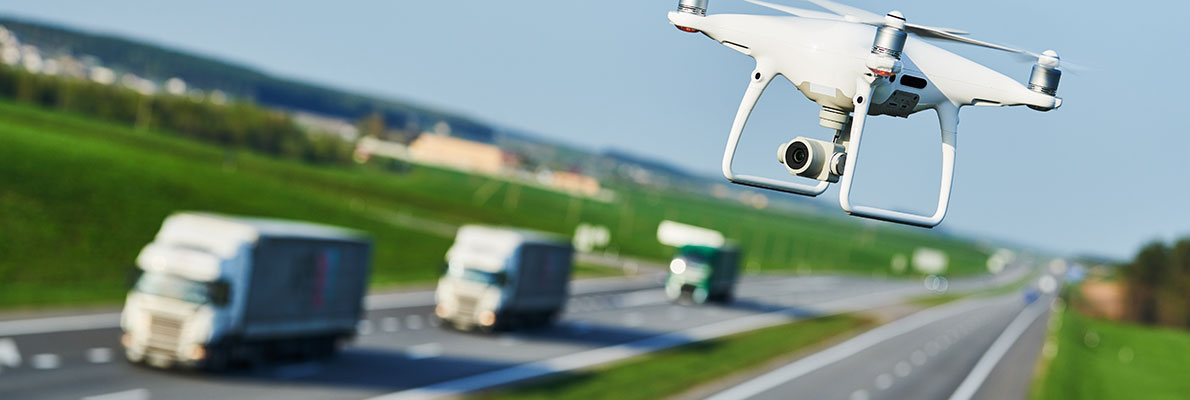
This week, the unmanned aerial vehicle (UAV) market is commanding our attention, both for its soaring valuation and for what it signals about the future of technology and how helium quietly anchors that trajectory. According to Astute Analytica, the global UAV market is set to nearly double from US $66.3 billion in 2024 to US $127 billion by 2033, growing at a 7.5 percent CAGR.
The market’s momentum is being fueled by strong defense procurement and rapidly expanding commercial uses – most notably in drone delivery. Once a niche experiment, UAVs are now reimagining the “last mile,” the most challenging and costly stage of the supply chain, where goods move from a distribution hub to a customer’s doorstep.
Zipline, a leading U.S.-based drone delivery company, has already logged 100 million autonomous miles as of March 2025, with projections pointing to 1.4 million medical deliveries by the end of this month.
In China’s Xichou County, Yunnan Province, a fleet of 16 heavy-lift UAVs transported 180 tons of steel and concrete up a remote mountain to a solar-power project last month. The job was completed in just three days – a task that would have taken a month by cableway due to rugged terrain and sheer cliffs – boosting efficiency tenfold. It’s a striking example of how UAVs are already reshaping infrastructure buildout.
The UAV market is being driven by rapid advances in AI, automation, and battery technology. Emerging trends include the miniaturization of drones for greater portability, the integration of AI to enable autonomous flight and advanced data processing, and the development of hybrid designs that combine the endurance of fixed-wing aircraft with the agility of rotary-wing systems.
Why this matters for helium:
In previous #PLSRINSIGHTS stories – from The Tech Industry’s Silent Crisis to From Marathons to Manufacturing – we’ve shown how helium is a strategic enabler. Today, that role is front and center in UAV technology, underpinning cryogenics, high-fidelity digital imaging and detection systems (including helium-charged, cryocooled Mid-Wave Infrared Cameras [MWIR]), and even airframe welding, as drones become indispensable across sectors.
As AI hardware and autonomous navigation systems grow increasingly sophisticated, drones are operating more frequently BVLOS (Beyond Visual Line of Sight), making helium’s integration across avionics, sensor technology, and AI compute mission-critical.
Pulsar Helium’s shares trade on TSXV: PLSR | OTCQB: PSRHF | AIM: PLSR
Disclaimer
This article contains information based on current market conditions and publicly available data. It does not constitute financial advice, and investors should conduct their own due diligence before making any investment decisions.
Marc Farrington
PR & Partnerships
marc@pulsarhelium.com#PLSRINSIGHTS
Follow us on X


