|
Ultra-Low-Temperature Cryogenics
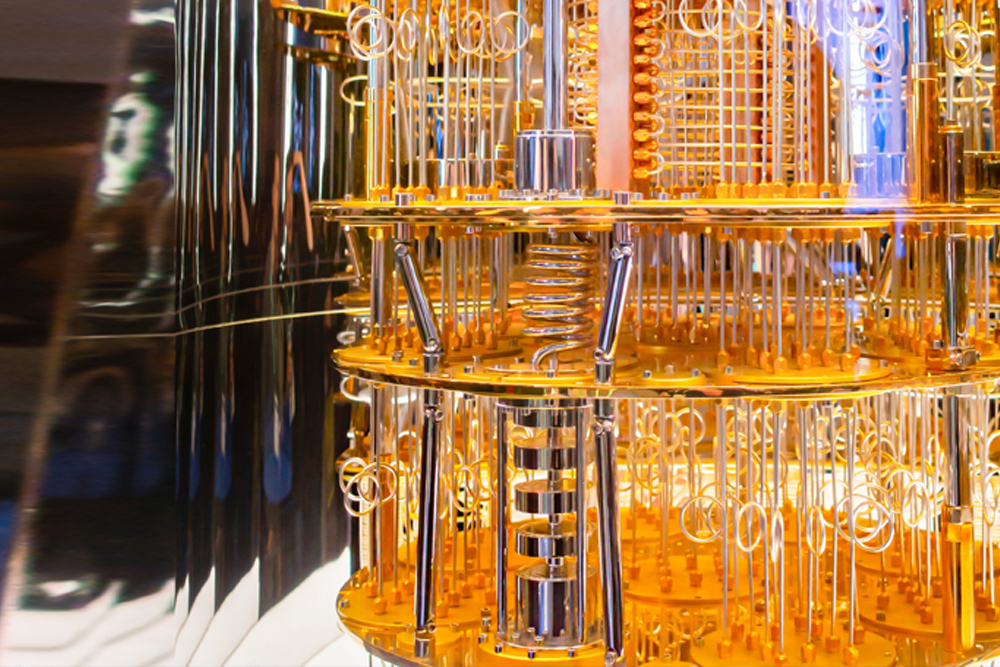
³He is a critical working fluid in dilution refrigerators, which reach temperatures below 0.01 K — essential for quantum computing, superconducting qubits, and particle physics instrumentation.
Demand is rising rapidly as quantum labs and chip foundries expand cryogenic capacity.
|
|
|
Neutron Detection & Radiation Monitoring
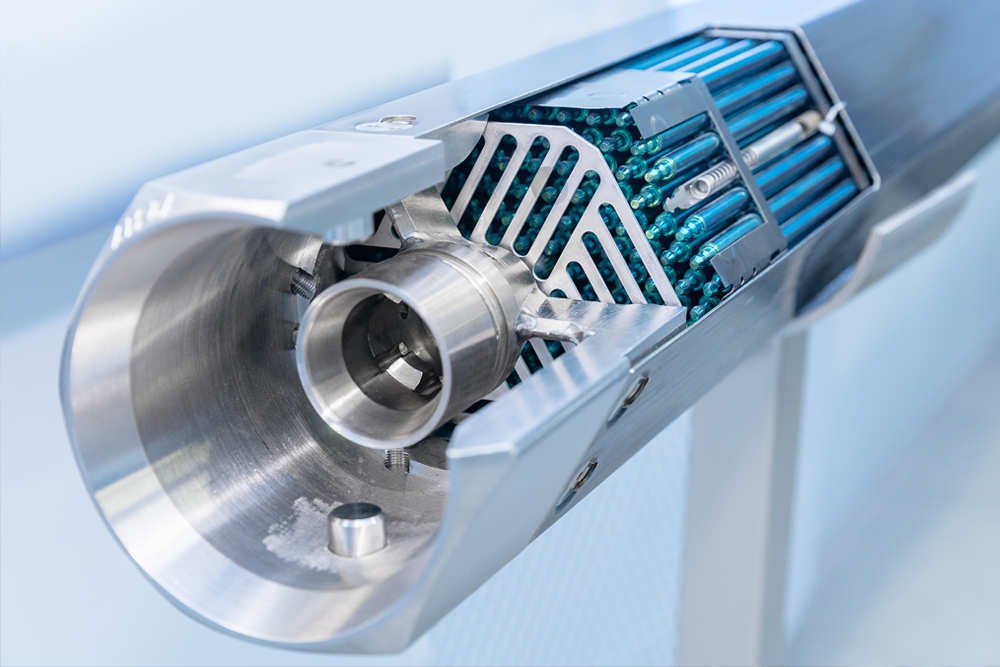
³He has a very high neutron-absorption cross-section, making it ideal for nuclear safeguards, homeland security, and scientific detectors.
Used in ³He proportional counters for border security, reactor monitoring, and fundamental research.
³He detectors remain the gold standard for precision applications.
|

|
|
Medical Imaging (hyperpolarized Gas MRI)
³He gas can be hyperpolarized and inhaled to visualize air flow and gas exchange in the lungs at microscopic resolution.
Enables high-contrast, radiation-free imaging of pulmonary diseases (COPD, asthma, fibrosis).
Clinical use has declined due to cost and supply, with ¹²⁹Xe emerging as a substitute — but ³He remains the benchmark for lung MRI research.
|

|
|
Fusion Research & Clean-Energy Concepts
³He + D (deuterium) fusion is aneutronic, releasing charged particles rather than neutrons — theoretically enabling radiation-free fusion reactors.
Research reactors (e.g., Princeton, ENEA, NASA Glenn) use small quantities for plasma diagnostics and confinement studies.
|

|
|
Quantum Technologies & Fundamental Physics
³He plays a role in quantum sensors, ultra-stable gyroscopes, and low-temperature NMR systems.
In superfluid form, it provides a unique testbed for quantum turbulence, superfluidity, and cosmology analogs (e.g., simulating black-hole event horizons).
|
|