
Tunu Project, Greenland (100% owned)
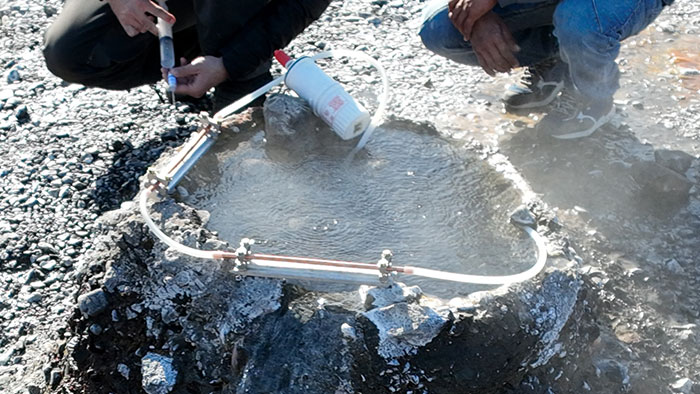
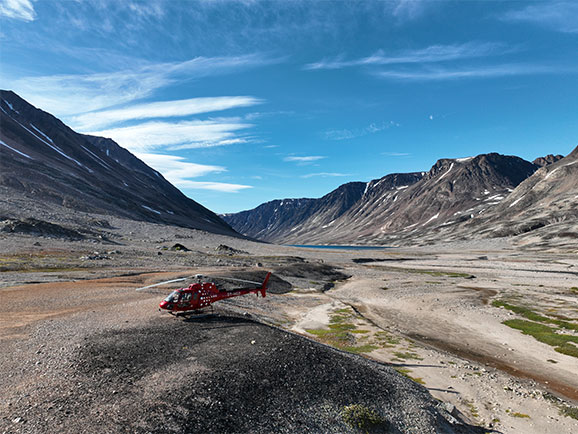
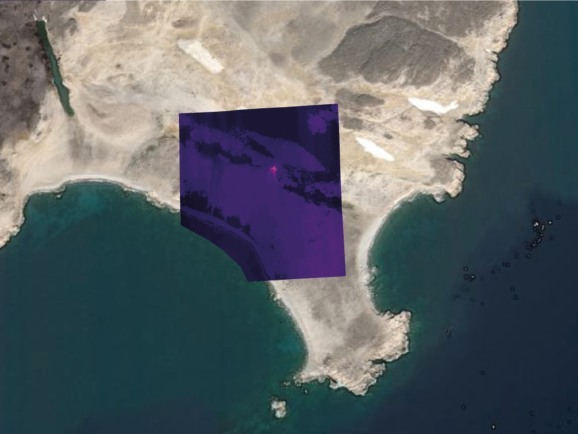
Tunu is a new helium province and one of the rare primary helium occurrences identified in Europe. The roughly 62 km² license (MEL-S 2025-101) was identified by the Pulsar team utilizing their proven geological model and experience. In 2022, sampling and gas analyses of hot springs identified helium contents of up to 0.8%, not associated with hydrocarbons. In 2024, a passive seismic survey at the Kap Tobin prospect identified two low-velocity anomalies coincident with the hot springs and a major fault system, supporting the case for a fractured, gas-accumulating reservoir. In 2026, the team carried out thermal drone surveys and surface mapping as part of a field program designed to rank high-potential structures ahead of drilling, building toward an appraisal well to directly test reservoir conditions.
Pulsar is the first mover exploring for helium in Greenland, having received the only license of its kind that gives exclusive rights for the exploration of helium, hydrogen, and all other minerals (excluding hydrocarbons and radioactive elements).
Potential also exists for geothermal energy, which is being actively assessed by the Company. Sproule-ERCE authored an independent Pre-Feasibility Study confirmed promising geothermal reservoir potential, temperatures of 80–130°C and flow rates of up to approximately 720 m³/hour, alongside an associated helium production opportunity.
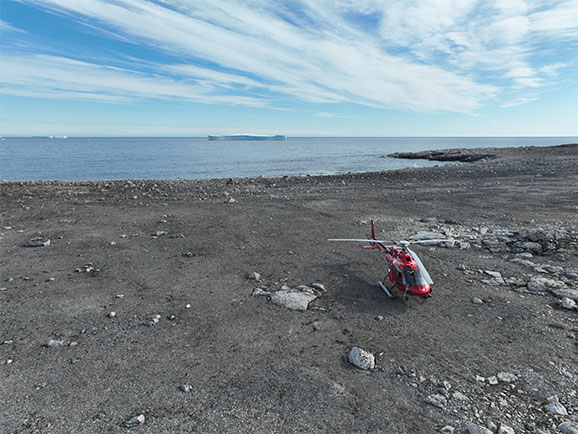
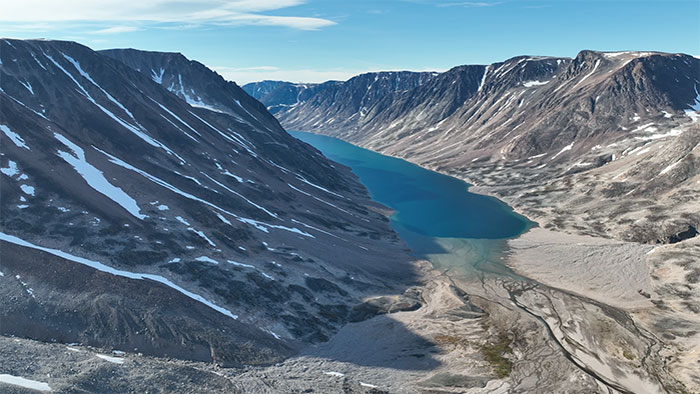
The project sits on the east coast of Greenland in Liverpool Land, a peninsula in eastern Greenland facing the main European continent. It is easily accessible: 5km from the settlement of Ittoqqortoormiit and 40km from Nerlerit Inaat International Airport (CNP). On the project's southern margin is Scoresby Sound, the largest fjord system in the world.
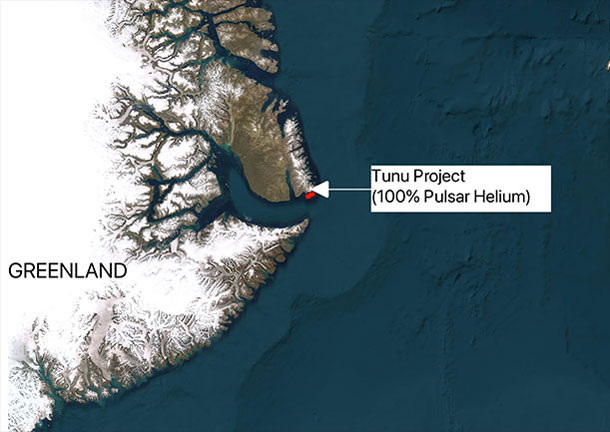
Latitude: 71° 00' 0.00" N
Longitude: -22° 00' 0.00" W
Existing survey data in Pulsar’s possession
Fugro's 2013 survey provided partial coverage of gradient magnetic data, while SkyTEM's 2013 survey partially covered magnetic and TDEM data.
Ambient Noise Tomography (also referred to as passive seismic) conducted by the Company in 2024, identifying two low-velocity anomalies at the Kap Tobin prospect coincident with surface hot springs and a fault system.
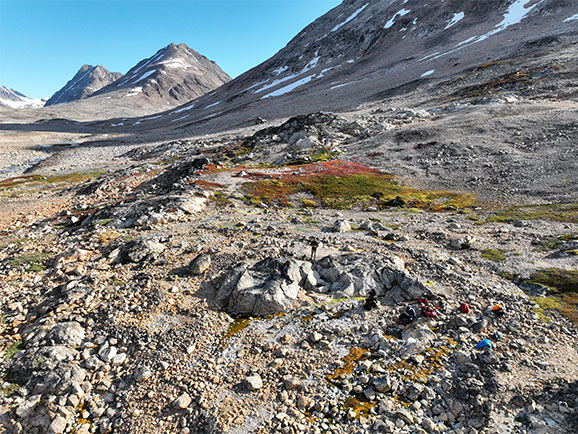
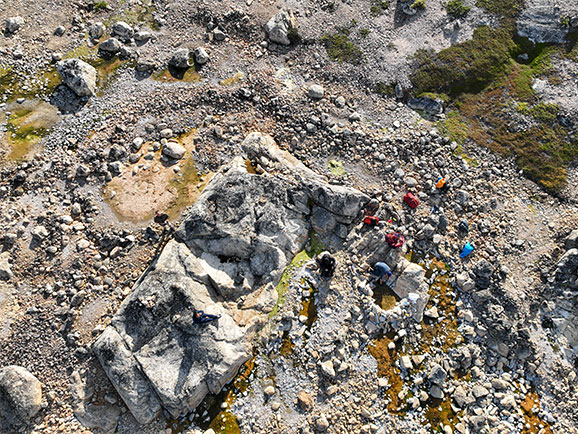
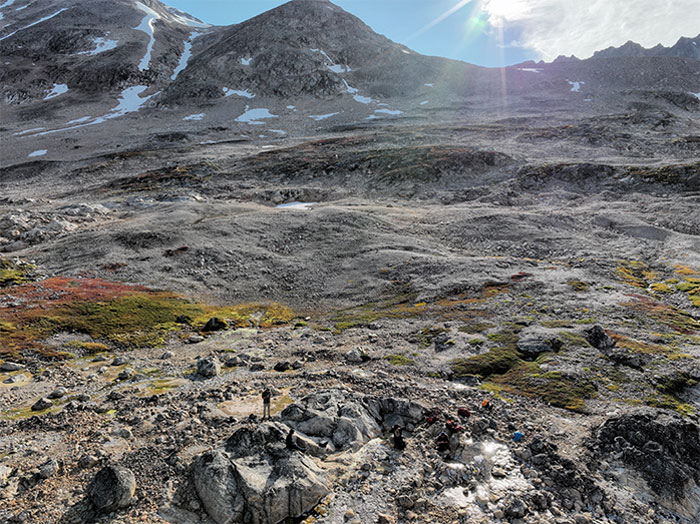
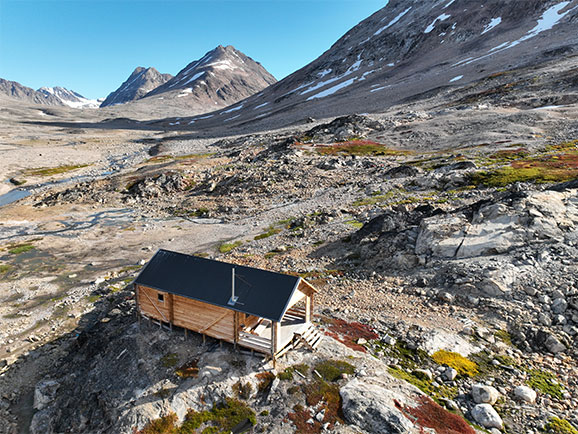
Thermal drone surveys and surface mapping conducted by the Company in 2026 as part of ongoing field de-risking ahead of drilling.
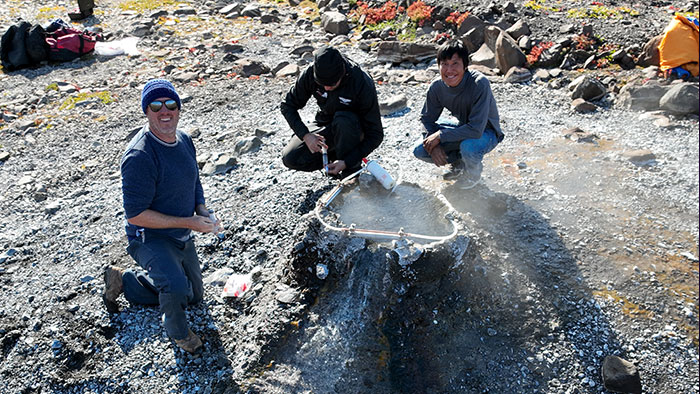
Multiple years of gas samples taken from thermal springs.
Geology
Tunu sits atop the Liverpool Land Basement High (LLBH), an outcropping high of ancient Proterozoic and Archean metamorphic and igneous basement rock, flanked by the Jameson Land Basin to the west and the offshore Liverpool Land Basin to the east. This U- and Th-rich basement is an excellent helium source, generating gas through radiogenic decay over billions of years. A deep heat source interpreted as the Jan Mayen and Iceland mantle plumes, helps liberate that helium and drive it upward along basement fracture systems, where it can be trapped beneath suitable seals: the key ingredients for a primary, non-hydrocarbon-associated helium system.
Early testing has underlined this potential. In 2022, sampling of thermal springs at Kap Tobin returned helium concentrations of up to 0.8%, with isotope signatures consistent with radiogenic, basement-sourced helium. A 2024 passive seismic survey at Kap Tobin identified two low-velocity anomalies coincident with the hot springs and a mapped fault system, suggesting a more fractured, and potentially more productive, reservoir than initially expected. In 2026, thermal drone surveys and surface mapping added further data to help target and rank the most prospective structures ahead of drilling. Together with earlier geophysics, magnetic and electromagnetic surveys, this work is steadily building the picture of a geothermally active, helium-rich system.
Access
Nerlerit Inaat airport is conveniently located near the license area and is serviced by planes from Greenland and Iceland. Tunu is not situated within a National Park or RAMSAR site. Iceland is 435km to the south-southeast, and the sea is free of ice from July to November.
Key Takeaways
Excellent Location
Europe-facing logistics, just 4 days by sea to Aarhus (Denmark), and easy access via the nearby Nerlerit Inaat airport.
Historic Provenance
documented for a century: measurements from thermal springs date back to 1925, when they identified predominately nitrogen plus noble gases (helium is a noble gas)
Comprehensive license
the broadest possible rights in one license, exclusive exploration for all mineral resources, including helium and hydrogen, except hydrocarbons and radioactive elements.


