


02/26/2026
Critical Materials & Resource Dependency
As The World’s Most Capitalised Private Space Company Pivots Toward The Moon, Industrial Economics Take Centre Stage, Signalling A New Resource Supercycle.
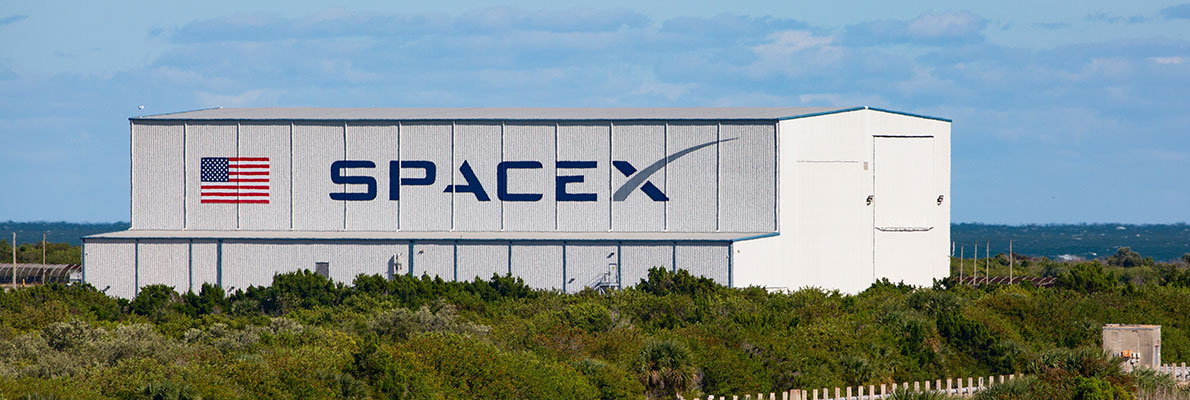
As The World’s Most Capitalised Private Space Company Pivots Toward The Moon, Industrial Economics Take Centre Stage, Signalling A New Resource Supercycle.
Recent signals from SpaceX suggest an important strategic evolution. While Mars has long dominated public imagination, commentary from Elon Musk increasingly points toward a morepragmatic near-term pathway: establish an industrial foothold on the Moon first.
From an engineering and economic perspective, the logic is compelling. The Moon sits just days from Earth rather than months, launch windows are frequent, and mission risk is significantly lower. Faster iteration cycles translate into faster learning curves, and ultimately faster commercial returns. For a capital-intensive, engineering-led company, proximity matters.
Central to this “Moon-first” strategy is in-situ resource utilisation (ISRU), using local materials rather than transporting everything from Earth. Lunar regolith contains silicon, aluminium, iron and titanium, creating the potential for on-site construction and manufacturing. Water ice (H2O) near the lunar poles could be converted into rocket fuel, supporting orbital logistics and reducing launch dependency. Embedded within lunar soil is also helium-3, a rare isotope long associated with advanced cryogenics, quantum technologies and future fusion concepts. Taken together, these geological fundamentals help explain the Moon’s growing appeal as a prospective industrial resource base.
In tandem, Musk has also emphasised nearer-term commercial priorities, including orbital infrastructure capable of supporting the rapidly expanding demands of AI computing and satellite networks. This convergence further highlights cislunar space (the region encompassing Earth, the Moon and the volume between them) as a new frontier poised for industrialisation.
Helium plays a critical role in space systems, advanced manufacturing and cryogenic applications.
Even under optimistic scenarios, meaningful lunar resource extraction remains years, probably decades away. By contrast, helium demand is accelerating today across semiconductors, space launch systems, quantum technologies, medical imaging and defence applications. These industries cannot wait for lunar supply chains to mature.
This reinforces a conclusion highlighted in Pulsar’s earlier analysis of helium-3 scarcity: terrestrial sources remain the only realistic near-term solution to structurally rising demand.
Pulsar Helium Inc. is positioned precisely within that window, advancing primary helium discoveries in stable jurisdictions and moving real projects toward production on commercial timelines. Laboratory analysis has confirmed the presence of helium-3 within produced gas streams at the Topaz Project in Minnesota. While further technical and economic evaluation is required to determine commercial recoverability, this demonstrates the occurrence of helium-3 in a terrestrial primary helium system.
If commercial quantities of helium-3 can ultimately be realised terrestrially, the implications are significant. Costs, technical risk and geopolitical complexity are inherently lower than lunar extraction, while supply could reach end-users far sooner, particularly for emerging quantum and advanced-physics applications where early availability may be decisive.
The increasing focus on lunar and orbital industrial infrastructure underscores the strategic importance of critical materials required for space and advanced technology applications. If space development becomes progressively industrial in nature, secure terrestrial supply chains may assume increasing strategic importance. For investors, the distinction is critical: those aligned early with secure, scalable terrestrial supply chains could benefit decades before the first kilogram of lunar material ever returns.
Pulsar Helium’s shares trade on TSXV: PLSR | OTCQB: PSRHF | AIM: PLSR
Disclaimer
This article contains information based on current market conditions and publicly available data. It does not constitute financial advice, and investors should conduct their own due diligence before making any investment decisions.
Marc Farrington
PR & Partnerships
marc@pulsarhelium.com#PLSRINSIGHTS
Follow us on X


